
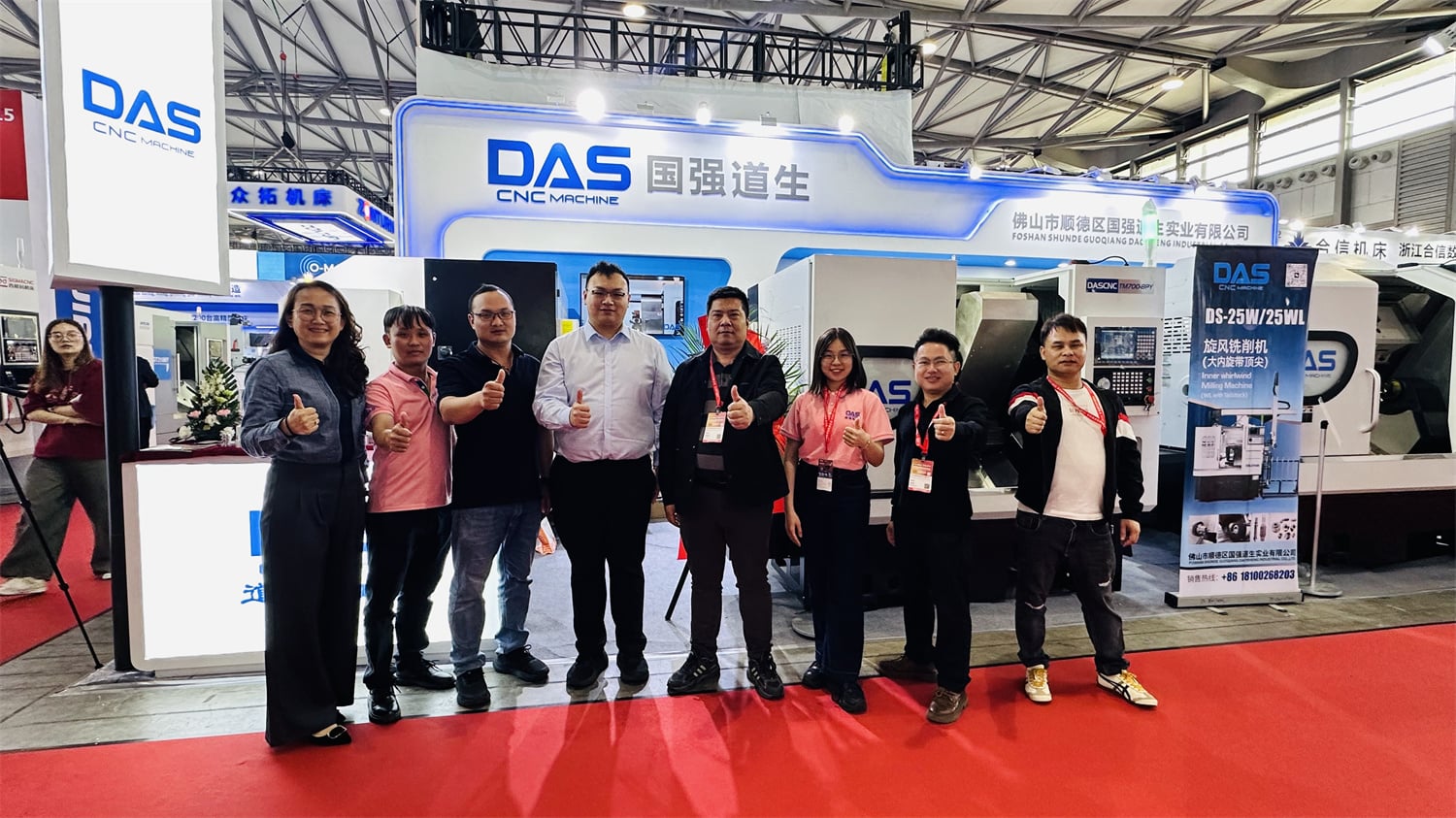
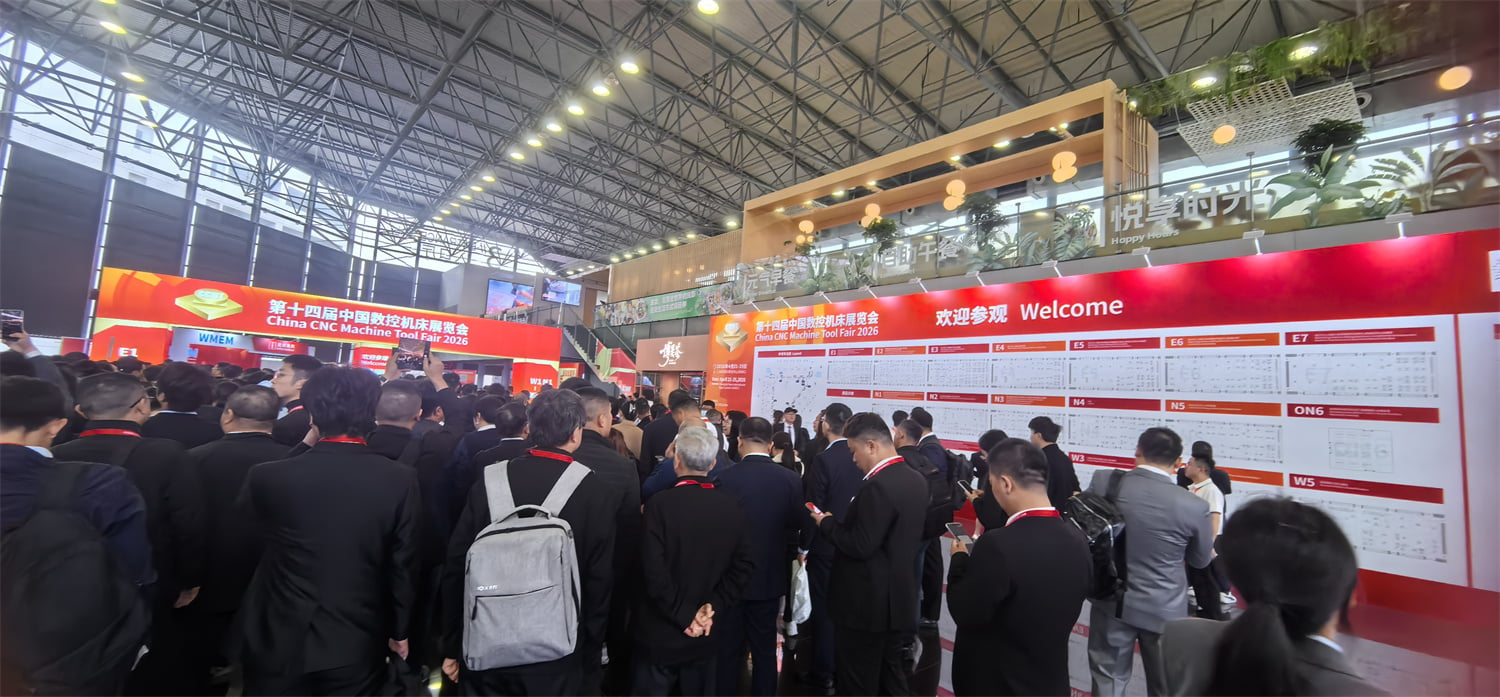
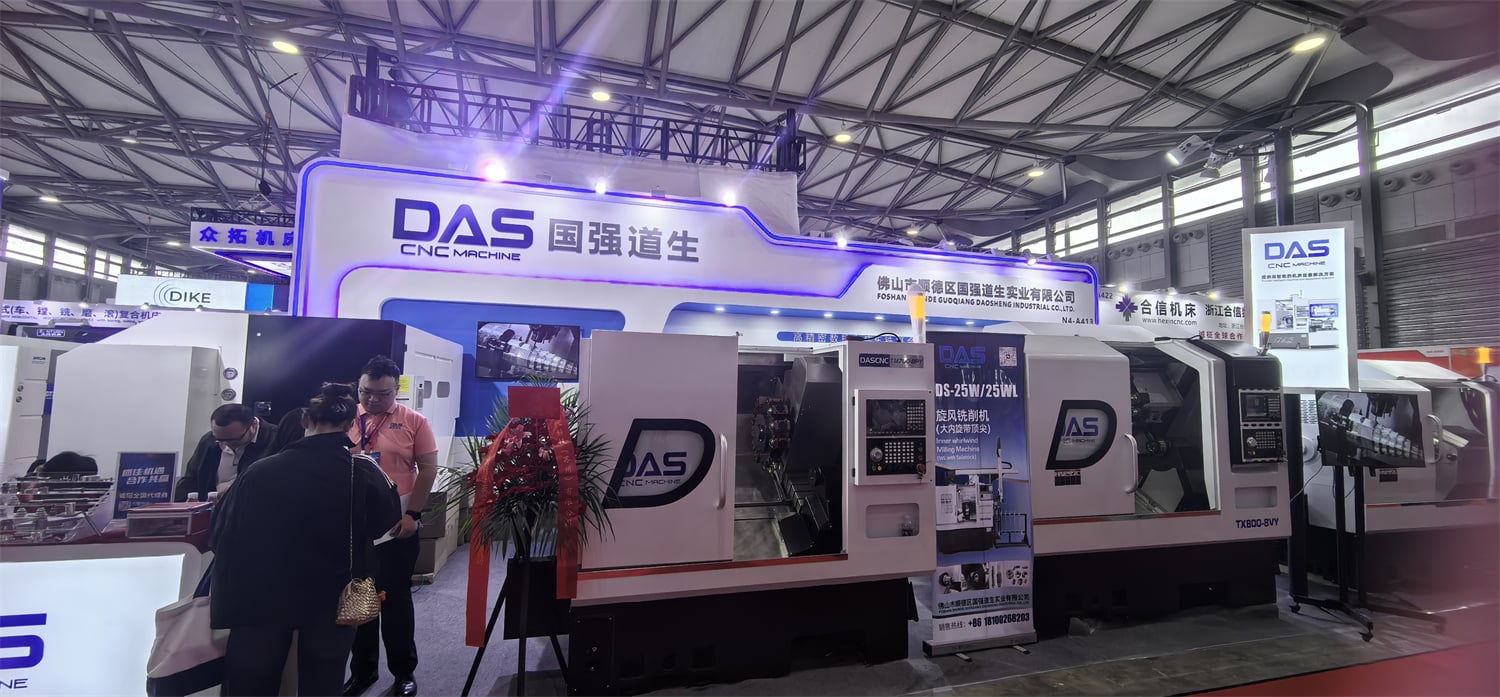
Από 21 έως 25 Απριλίου 2026, πραγματοποιήθηκε με επιτυχία η 14η Κινεζική Έκθεση Εργαλειομηχανών CNC (CCMT) στο Κέντρο Νέας Διεθνούς Έκθεσης Σανγκάη. Η DAS παρουσίασε αρκετά κλειδιά μοντέλα, συμπεριλαμβανομένου του καινούργιου Τόρνου CNC με διπλό άξονα Y και διπλό άξονα περιστροφής 8 ιντσών (TA-8-DIY), του Τόρνου CNC Στροφής-Κοπής Σύνθετου Τύπου με άξονα Y και προγραμματιζόμενη ουραία στήριξη (TM700-8PY), του Τόρνου CNC με Εικονικό Άξονα Y και προγραμματιζόμενη ουραία στήριξη (TX800-8VY), καθώς και του Μικρού Τόρνου CNC Επίπεδης Βάσης Τύπου Ομάδας (DS-25A).
Μία βασική παρατήρηση από την έκθεση: για τους πελάτες εκτός Κίνας, ο πραγματικός κινητήριος μοχλός αγοράς σπάνια είναι αποκλειστικά η τιμή. Αντ’ αυτού, θέτουν ένα κρίσιμο ερώτημα — μπορεί αυτή η μηχανή να γεννά συνεχώς κέρδη;
Παρακάτω αναφέρονται οι επτά διαστάσεις που χρησιμοποιούν οι πελάτες για να αξιολογήσουν έναν τόρνο CNC στην έκθεση.
Ικανότητα Κατεργασίας (Πρώτη Προτεραιότητα)
1. Τι μπορεί να κατασκευάσει;
Οι πελάτες ελέγχουν πρώτα:
Μέγιστη διάμετρος και μήκος κατεργασίας
Συμβατότητα με υλικά (π.χ. ανοξείδωτο χάλυβα, κράμα τιτανίου)
Τυπικές ερωτήσεις:
Μπορεί να κατεργάζεται ανοξείδωτο χάλυβα;
Ποια είναι η μέγιστη διάμετρος κατεργασίας;
2. Ακρίβεια κατεργασίας
Βασικά ζητήματα:
Επαναληψιμότητα (±0,005 mm / ±0,01 mm)
Στρογγυλότητα, ομοαξονικότητα, τραχύτητα επιφάνειας
Μακροπρόθεσμη σταθερότητα της ακρίβειας
Πολλοί φέρνουν δείγματα εξαρτημάτων για να ελέγξουν απευθείας την επιφανειακή απόληξη.
3. Αποδοτικότητα κατεργασίας
Κύρια Μετρήματα:
Χρόνος κύκλου
Ταχύτητα αλλαγής κοπτικών εργαλείων, ταχύς προσανατολισμός
Υποστήριξη διαύλου μηχανοκατεργασίας
Τι θέλουν πραγματικά να γνωρίζουν οι πελάτες:
Πόσο πιο γρήγορη είναι η μηχανή σας από την αντίστοιχη του ανταγωνιστή για το ίδιο εξάρτημα;
II. Δομή και Σταθερότητα της Μηχανής
Βάρος Μηχανής: Οι πελάτες γίνονται όλο και πιο ενήμεροι. Ρωτούν απευθείας — Το καθαρό βάρος; Βαρύτερες βάσεις προσφέρουν καλύτερη απόσβεση ταλαντώσεων, ακαμψία και σταθερότητα.
Ποιότητα Χυτοσιδήρου: Meehanite, HT300, χύτευση με ρητίνη — αυτά καθορίζουν την αντίσταση στην παραμόρφωση και τη διάρκεια ζωής.
Τύπος Οδηγού: Γραμμικός έναντι κουτιού· εμπορικές μάρκες όπως THK, HIWIN, PMI.
III. Εμπορικές Μάρκες Βασικών Εξαρτημάτων
Εδώ είναι που οι πελάτες εμβαθύνουν:
CNC Ελεγκτής: Fanuc; Siemens; Mitsubishi; SYNTEC;
Σερβοκινητήρες: Μάρκα, ισχύς, επισκεψιμότητα
Κιβώτια κυλίνδρων: SKF, NSK, FAG
Κοχλιοειδή περιστρεφόμενα στοιχεία: Βαθμός C3 ή C5; Προέλευση μάρκας;
IV. Ετοιμότητα για Αυτοματοποίηση
Η αυτοματοποίηση αναπτύσσεται ραγδαία. Οι πελάτες δεν αγοράζουν πλέον απλώς μια αυτόνομη μηχανή — επενδύουν σε αυτοματοποιημένα κύτταρα παραγωγής.
Ελέγχουν:
Συμβατότητα με τροφοδότες ράβδων, ρομπότ, γερανούς φόρτωσης
Αυτόματη φόρτωση/εκφόρτωση, λειτουργία «χωρίς φως» (lights-out)
Διεπαφές αυτοματοποίησης, επέκταση εισόδων/εξόδων (I/O), ενσωμάτωση ρομπότ
V. Κόστος συντήρησης (TCO)
Οι ενήλικες πελάτες επικεντρώνονται στο Συνολικό Κόστος Κατοχής.
Μπορεί να αποδεχθούν μια τιμή μηχανήματος υψηλότερη κατά 5.000 $ — αλλά όχι μια διακοπή λειτουργίας τριών ημερών λόγω αναμονής για ανταλλακτικά.
Βασικές Σκέψεις:
Τιμή των εξαρτημάτων φθοράς
Διαθεσιμότητα Συναλλακτικών Μερών
Χρόνος αντίδρασης συντήρησης
VI. Μάρκα & Δυναμικό της Εργοστασιακής Παραγωγής
Στην έκθεση, οι πελάτες αξιολογούν επίσης τον κατασκευαστή:
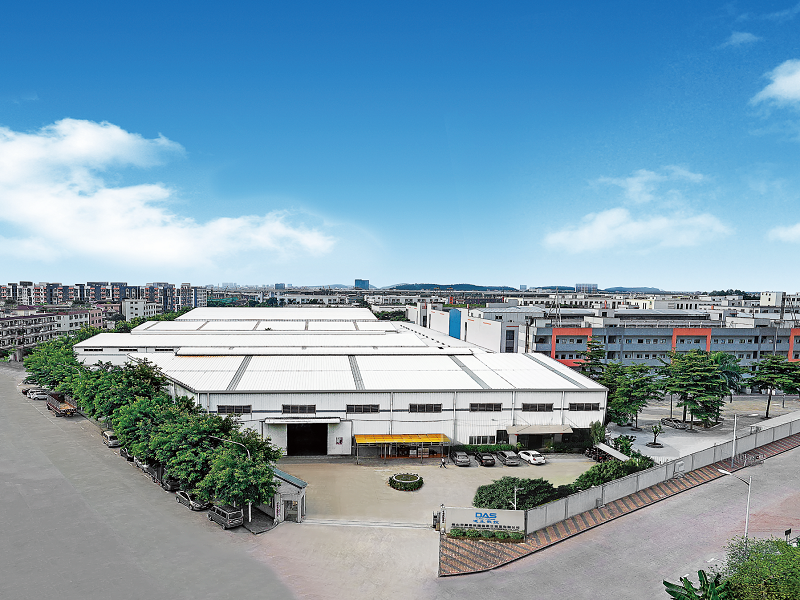
Μέγεθος εργοστασίου, ετήσια παραγωγή, αριθμός εργαζομένων
Αγορές εξαγωγών, χρόνια λειτουργίας
Τυπικές ερωτήσεις:
Πόσες μηχανές παράγετε μηνιαίως;
Σε πόσες χώρες έχετε εξάγει;
Τελικές Σκέψεις
Στο CCMT 2026, η DAS δεν παρουσίασε απλώς μηχανήματα, αλλά συμμετείχε επίσης σε βαθιές, πραγματικές συζητήσεις με παγκόσμιους πελάτες. Πιστεύουμε αποφασιστικά ότι μια μηχανή η οποία διασφαλίζει συνεχώς κερδοφόρα παραγωγή αποτελεί επένδυση αξίας. Αν δεν μας επισκεφθήκατε στην έκθεση, μη διστάσετε να επικοινωνήσετε με την ομάδα της DAS — ανυπομονούμε να σας προσφέρουμε επαγγελματικές λύσεις σύνθετης τόρνευσης-φρεζαρίσματος.
Πνευματικά Δικαιώματα Κατοχύρωσης © Foshan Shunde Guoqiang Daosheng Industrial Co., Ltd. Όλα τα δικαιώματα κατασκευαστικά.
 EN
EN
 Επικαιρότητα